

The Envelope Method: Still Relevant in the Digital Era? ✉️🤔
Amidst a veritable blizzard of contactless payments, instantaneous transfers, and digital wallets, the notion of managing money by literally stashing cash into physical envelopes might seem as quaint as dial-up internet. Yet, in a turn of events that may seem as perplexing as fin de siècle fashion resurgences, the envelope method—an age-old budgeting technique—refuses to quietly fade to obscurity. But is it mere nostalgia, or does this tangible tool wield real value in our increasingly virtualized world? 💻💳
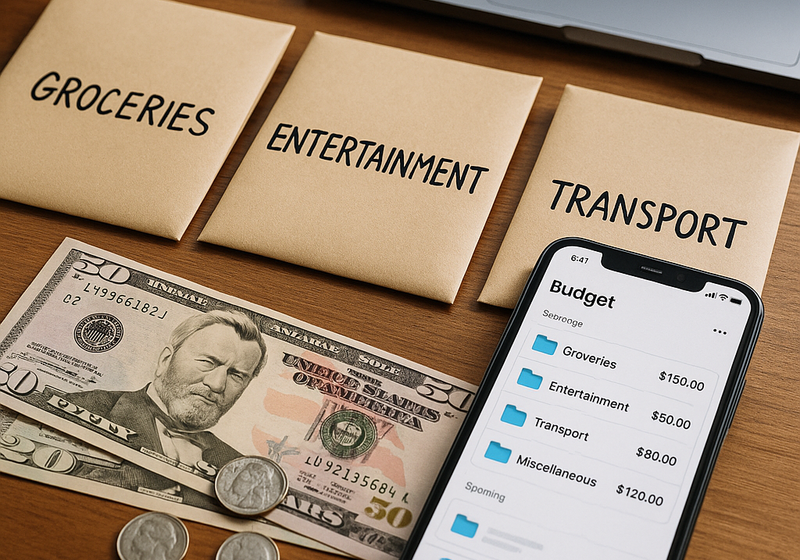
The foundational premise of the method is disarmingly simple: Allocate hard cash to various spending categories (groceries, transport, entertainment, etc.) at the start of each pay cycle, slipping each sum into a labeled envelope 🏷️. When the envelope runs dry, so does the spending, at least until the next budget period. This simplicity, paradoxically, is both its triumph and its Achilles’ heel in the 21st century.
The Roots and Psychology of Cash
Although it gained popularity in the 20th century, the concept of segmenting funds for designated purposes traces back through the annals of civilization. The modern envelope method gained traction as an intuitive, visual strategy to impose discipline on discretionary spending. Its effectiveness hinges on behavioral economic principles—most notably, the concept of “pain of paying.” Shelling out hard cash triggers the brain’s pain centers in a manner far more visceral than the nondescript swipe of a card or a nonchalant click on “buy now”. Watching the cash physically dwindle in an envelope creates a consciousness of limits infinitely stronger than glancing at a digital bank balance.
Research into financial behavior, such as studies conducted by Drazen Prelec and George Loewenstein, suggests that the temporal separation between payment and consumption (quintessential among credit card transactions) diminishes the perceived cost. Cash, on the contrary, demands immediate, tangible outflow, fortifying the link between expense and depletion of resources.
Moreover, the method necessitates proactive planning. It demands sitting down, scrutinizing income, delineating spending categories, and earmarking fixed amounts. This exercise of conscious budgeting is, in and of itself, a crucial stride toward better financial control.
The Challenge of a Less Tangible World
The burgeoning financial digitalization poses obvious hurdles to the rigorous application of the traditional envelope method. Cash usage is in free fall across numerous economies, with some retailers even turning it away. Automatic bills, subscription payments, and online purchases have become the standard—transactions that inherently resist the grasp of physical banknotes. 🌐
- Automatic payments: Direct debits for utilities (electricity, water, internet, rent) don’t readily fit into the physical envelope model.
- Online shopping: For many, e-commerce accounts for a substantial slice of expenditure, necessitating digital payments.
- Reduced cash usage: The convenience and ubiquity of cards and mobile payments render managing large wads of cash impractical and, to some, downright unsafe.
- Complex tracking: Combining cash expenditures from envelopes with digital spending can muddle overall budget tracking.
These factors lead many to question if the method is nothing short of atavistic, a financial relic 🏛️.
Adapt or Extinct: The Reimagined Envelope
The answer rests solidly in adaptation. While an unwavering commitment to physical envelopes may be unworkable for many, the core tenets of the method—segmentation, visual limits, and mindful spending—remain resolutely pertinent. The key lies in translating these principles to the digital terrain or adopting a hybrid approach. 🚀
1. Virtual Envelopes and Budgeting Apps 📱📊
A smattering of personal finance apps (like YNAB, Goodbudget, Wallet by BudgetBakers, among others) explicitly leverage the “virtual envelopes” concept. These allow digital income distribution across spending categories. Purchases via card or transfer are logged and deducted from the corresponding digital “envelope”. These solutions provide:
- Synchronization with bank accounts for near-automatic tracking.
- Clear visibility of remaining funds in each category.
- Accessibility from virtually anywhere.
- Detailed reports on spending patterns.
These apps modernize the method, retaining its essence while aligning it with digital cash flows.
2. Multi-Account Strategy 🏦
Some replicate the method using multiple bank accounts or sub-accounts (offered by certain digital banks). One might maintain a principal account for income and fixed bills, then apportion specified amounts into other accounts designated for variable expenses (groceries, entertainment, clothing). Using a different debit card for each account operates as a “digital envelope”.
3. The Hybrid Approach 💵+💳
For many, the most pragmatic solution is a combination. Employ online banking and direct debits for fixed, predictable expenses (mortgage/rent, utilities, insurance), and apply the physical envelope method with cash for more variable and discretionary categories:
- Supermarket and grocery shopping.
- Dining and outings.
- Leisure and entertainment.
- Small personal expenses (“pocket money”).
This approach harnesses cash discipline where it’s most needed (discretionary spending) while retaining digital convenience for the rest.
4. Modern “Cash Stuffing”
The envelope method’s revival, frequently under the viral guise of “cash stuffing” on social media, underscores its enduring appeal, especially among younger generations keen on control amidst economic uncertainty. Often employing plastic-sleeved binders instead of envelopes, the principle remains the same. This resurgence emphasizes the human yearning for tangibility and visual control in financial management, even as a remedy to digital abstraction.
Still Effective? Updated Pros and Cons
In evaluating the method (in its pristine or adapted forms) today:
Enduring Advantages 👍
- Built-in Discipline: The clear physical or visual limit remains a robust bulwark against impulsive spending.
- Spending Awareness: Forces confrontation of actual spending by category.
- Conceptual Simplicity: Easy to comprehend and implement in its basic form.
- Debt Prevention: By only spending allocated money, debt accumulation is difficult (especially with pure cash methods).
- Psychological Control: For many, physically handling money (or its direct digital representations) yields a heightened sense of control.
Modern Disadvantages and Considerations 👎
- Partial Incompatibility: The pure physical method clashes with the dominant digital payment infrastructure.
- Security: Handling large amounts of cash poses risks.
- Inconvenience: Withdrawals and carrying cash regularly is required. Digital tracking demands discipline to log transactions.
- Fewer Rewards: Misses out on credit card points, cashback, or other benefits (though this can be advantageous if it prevents overspending).
- Inflexible Budgets: Adapting the budget mid-cycle for unexpected expenses can be challenging (though an “emergencies” envelope may help here).
A Valuable Principle Needing Flexibility
The envelope method, in its core tenet of budget allocation and categorical expenditure limits, remains an exceptionally effective tool to reign in personal finances. To claim it doesn’t “work” in the digital age ignores its adaptable potential. Are the *principles* underpinning the method applicable today? Indisputably, yes✅. Whether through physical envelopes for certain categories, virtual envelope apps, a multi-account strategy, or a mix of these, deliberately planning, allocating, and limiting spending by category is intrinsic to financial well-being.
Success is less about dogmatic adherence to a specific version of the method and more about understanding its underlying logic and smartly adapting it to personal financial scenarios and tools. The digital age hasn’t buried the envelope method—it’s challenged it to evolve. In its modern iterations, it continues to offer a clear roadmap for more conscious and controlled financial management 💡💰.